
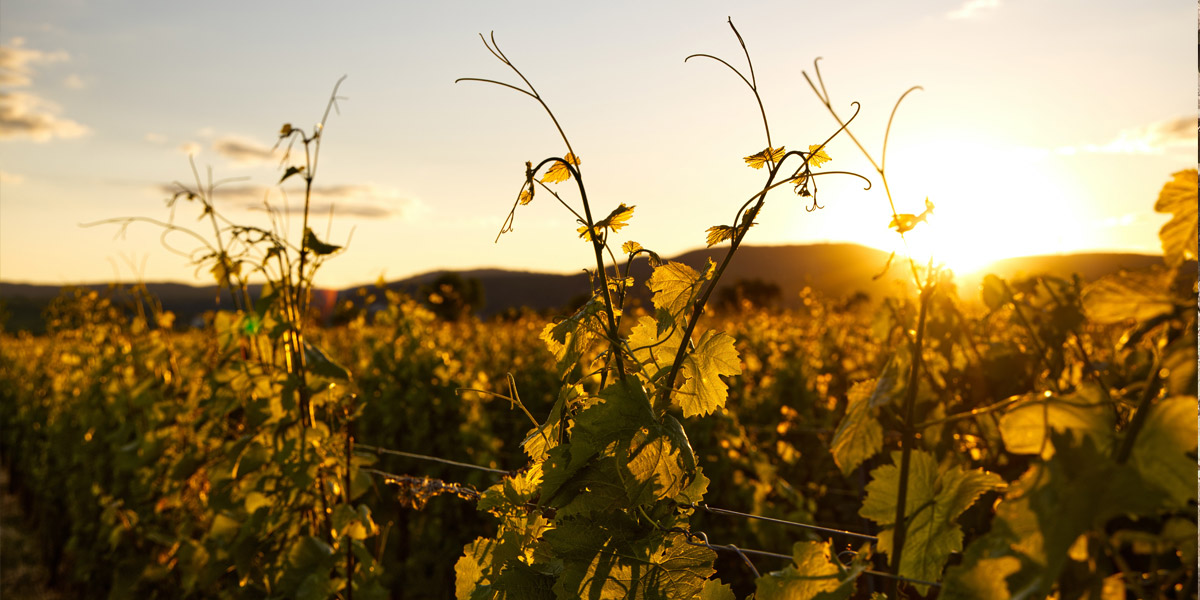
To talk about Utiel-Requena is to talk about wine. This inland region of Valencia has more than 31,800 hectares of vineyards in production. Furthermore, in the nine municipalities that make up the region (Caudete de las Fuentes, Camporrobles, Fuenterrobles, Requena, Siete Aguas, Sinarcas, Utiel, Venta del Moro and Villargordo del Cabriel) we can find 113 wineries which, together with the 4,500 families dedicated to agriculture, are the driving force, strength and pride of this territory.
Thanks to the deposits located in the area, it has been possible to demonstrate that wine has been produced in Utiel-Requena uninterruptedly for more than 2,600 years. The findings in the deposits of Kelin, El Molón or Las Pilillas show both a meticulous production and elaboration as well as a whole distribution infrastructure through the rivers of the region, being evident through the vestiges the elaboration of wine since ancestral times. Its relief forms a plateau of 45 kilometers in diameter, with an almost circular perimeter and more than 1,800 square kilometers, with an average altitude above sea level of 700 meters.
The climate is one of the particularities in this environment given its high oscillations between day and night. In 2022, the autumn and winter were hot and extremely dry, but thanks to the rains in the spring, bud break was good in May. The dry and warm summer resulted in grapes arriving at the winery in optimum quality, both in terms of health and ripeness.
The autochthonous variety par excellence in Utiel-Requena is Bobal. It is the autochthonous red variety that distinguishes the wines of the Utiel-Requena PDO and is its main standard-bearer. With 20,500 ha of Bobal vineyards (64% of the total), this majority variety is particular for its resistance to climatic fluctuations, which is why it has achieved a great adaptability in the territory. Of the total bobal vineyards, 44% of them are old vineyards that are more than 45 years old (8,950 hectares).
Red wines are characterized by their intense red tones, some of them with purplish reflections, with a particular aroma of red-black fruits and a great balance between acidity and alcohol content. Its characteristics are:
Visual aspect: Intense red colors with violet reflections, sometimes evolving to cherry red depending on its maturity.
Aromatic aspect: Aromas of black-red fruit. With the passage of time the aromas evolve to ripe fruit.
Tasting aspect: Wines with body, good intensity and generally balanced acidity.
As for white varieties, Tardana, also called Planta Nova, is the native white variety of Utiel-Requena and has almost 300 hectares. The DO's white wines are intense in aromas, generally fruity, which are fresh in the mouth.
Currently, the Regulatory Council and the CSIC are collaborating on a project called Valora Bobal. The study, still in the development phase since it is 11 years in the making, has already yielded its first results. It warns of a large amount of resveratrol in Bobal wines, much higher than in other varieties and other areas. This load is attributed to the climatic stress typical of this PDO due to the strong thermal oscillations throughout its vegetative cycle, as well as to water stress.
The Regulatory Council is a body that certifies that the registered wineries and the wines they sell meet the requirements of the quality regulations of the Designation of Origin. It is also responsible for promoting the Utiel-Requena brand, both locally, nationally and internationally.

c/ Cuesta Carnicerías,9 - Requena, Valencia
Phone: 660 073 280
Email: info@rutavino.com
Travel agency licence CV-m1075-V